For several years, talc has garnered a negative reputation due to lawsuits against Johnson & Johnson and “rumours” about its carcinogenic potential, but it is now officially listed as a potential carcinogen by the WHO (World Health Organization).
The World Health Organization (WHO) issued a warning on the 5th July 2024, regarding the dangers of talc. Following a study conducted by a group of 29 scientists from 13 countries convened at the International Agency for Research on Cancer (IARC) in Lyon, France, the findings were published in the journal The Lancet Oncology: talc is classified as a “probably carcinogenic” substance. This conclusion is based on limited evidence of cancer in humans, particularly ovarian cancer, and sufficient evidence obtained from studies on laboratory animals. While women are primarily at risk when applying talc to their genital areas, the main groups affected are workers in the extractive and manufacturing industries who extract, grind, and produce products containing talc.
A Risk of Asbestos Contamination
In its study, the WHO specifies that “although the evaluation focused on asbestos-free talc, asbestos contamination of talc could not be ruled out in most studies involving exposed individuals. The real concern lies with asbestos fibres, a substance proven to be carcinogenic in humans since 2010, which can be found in talc. These two minerals are often found together in the same geological deposits and may become mixed. While the results of various studies remain inconclusive, health professionals advise limiting the use of talc and opting for safer alternatives.
Industrial Consequences
In June, Johnson & Johnson, the American pharmaceutical giant, reached a definitive settlement with the justice system of 42 U.S. states in a case where its talc was accused of causing cancers. The company faced thousands of lawsuits, accused of failing to adequately warn consumers about the potential risks associated with its talc-based products.
A Reuters investigation published in 2018 revealed that J&J was aware of the potential toxicity of its body powders, which, as of 2017, were linked to the development of numerous cancers. The American company, which had disputed the Reuters report, announced in 2020 that it would withdraw its baby talc from sale in the United States and Canada. Johnson & Johnson discontinued talcum powder sales throughout the world in 2023.
However, a study summary published in January 2020, involving 250,000 women in the United States, did not find a statistically significant link between the use of talc on the genital area and the risk of ovarian cancer. This meta-analysis highlighted the complexity of the relationship between talc exposure and cancer development, emphasising the need for further research to clarify the exact risks.
Despite these mixed results, the WHO’s decision underscores the importance of caution in using talc-containing products. Consumers and healthcare professionals are encouraged to remain vigilant and consider available alternatives, especially for personal care products. Prevention and strict regulation are essential to minimise the potential risks associated with talc and to protect public health.
Cosmetics giants Chanel, L’Oréal, and Revlon are gradually phasing out talc powder, which has been used in many of their beauty products, as lawsuits related to cancer development increase, reflecting growing consumer health concerns.
In March 2020, Amy Wyatt, a spokesperson for Chanel, commented on the legal case of a California woman who developed mesothelioma, a rare form of cancer with asbestos exposure as its sole established cause. The plaintiff had used a talc-based body powder that Chanel had decided to withdraw from the market in 2016.
“It was a safe product,” Amy Wyatt stated during her deposition, but “we decided to respect public perception and remove it from the market.”
While Revlon’s spokesperson confirmed that the company had removed talc from its body products, without commenting on the litigation, L’Oréal prefers to find an ingredient that could replace talc in its cosmetics.
Kaolin : a safe alternative to talc
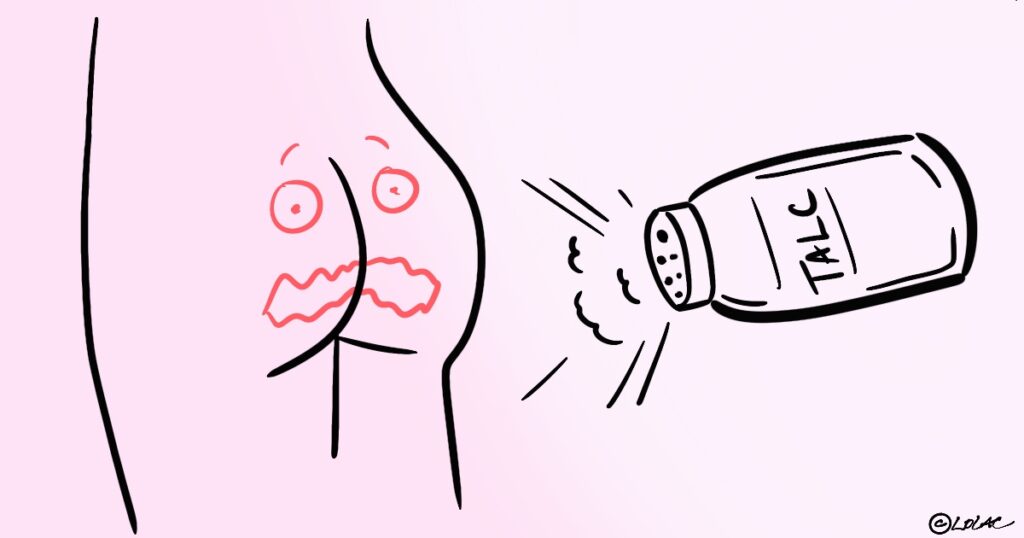
In New Zealand, the beloved brand Ecostore has labelled talc as a nasty ingredient. So, what should we use to keep our butts happy?
Kaolin, a type of clay, is emerging as an excellent alternative to talc in various products, particularly in personal care and cosmetic applications. Here’s why kaolin is a favourable substitute:
- Non-Carcinogenic: Unlike talc, kaolin does not contain asbestos or any other known carcinogens. This makes it a safer choice, particularly in products applied to sensitive areas of the body.
- Gentle on the Skin: Kaolin is known for its gentle properties, making it suitable for use in skincare products. It absorbs excess oil and impurities without causing irritation, which is ideal for individuals with sensitive skin.
- Natural and Biodegradable: Kaolin is a natural mineral and is biodegradable, making it a more environmentally friendly option compared to talc. It poses less risk of environmental contamination and aligns with sustainable practices.
- Absorbent Properties: Like talc, kaolin has excellent absorbent qualities, which helps in keeping skin dry and comfortable. It can be used effectively in powders, deodorants, and other products designed to control moisture.
- Versatility: Kaolin is versatile and can be used in a wide range of products beyond personal care, including in pharmaceuticals and industrial applications. Its adaptability makes it a valuable ingredient in many formulations.
It is now expected that fewer and fewer brands will use talc in their cosmetics due to its bad reputation. Let’s not forget that science continually uncovers the harmful effects of compounds that were once deemed safe—just as we saw with the advertisements in the 1950s promoting cigarettes as doctor-recommended. As our understanding of health evolves, ingredients previously considered harmless can be reassessed, reminding us to stay informed and cautious about what we use on our bodies